How to Plan a Garden Makeover on a Realistic Budget: Simple Design and Affordable Furniture Tricks
Many UK gardens fall into one of two camps: they demand constant work, or they look sparse and unfinished. The good news is that a low maintenance garden that looks expensive is achievable on most budgets, and it rarely depends on costly materials.
The real secret is a handful of simple landscape principles – clean lines, repetition and good structure – paired with affordable, carefully chosen garden furniture and a few low-cost details. At Wisteria Landscapes, these are the same ideas we apply when planning and building gardens.
Below you will find practical design rules, furniture choices that punch above their price, and budget garden upgrades that make a space feel considered and premium.
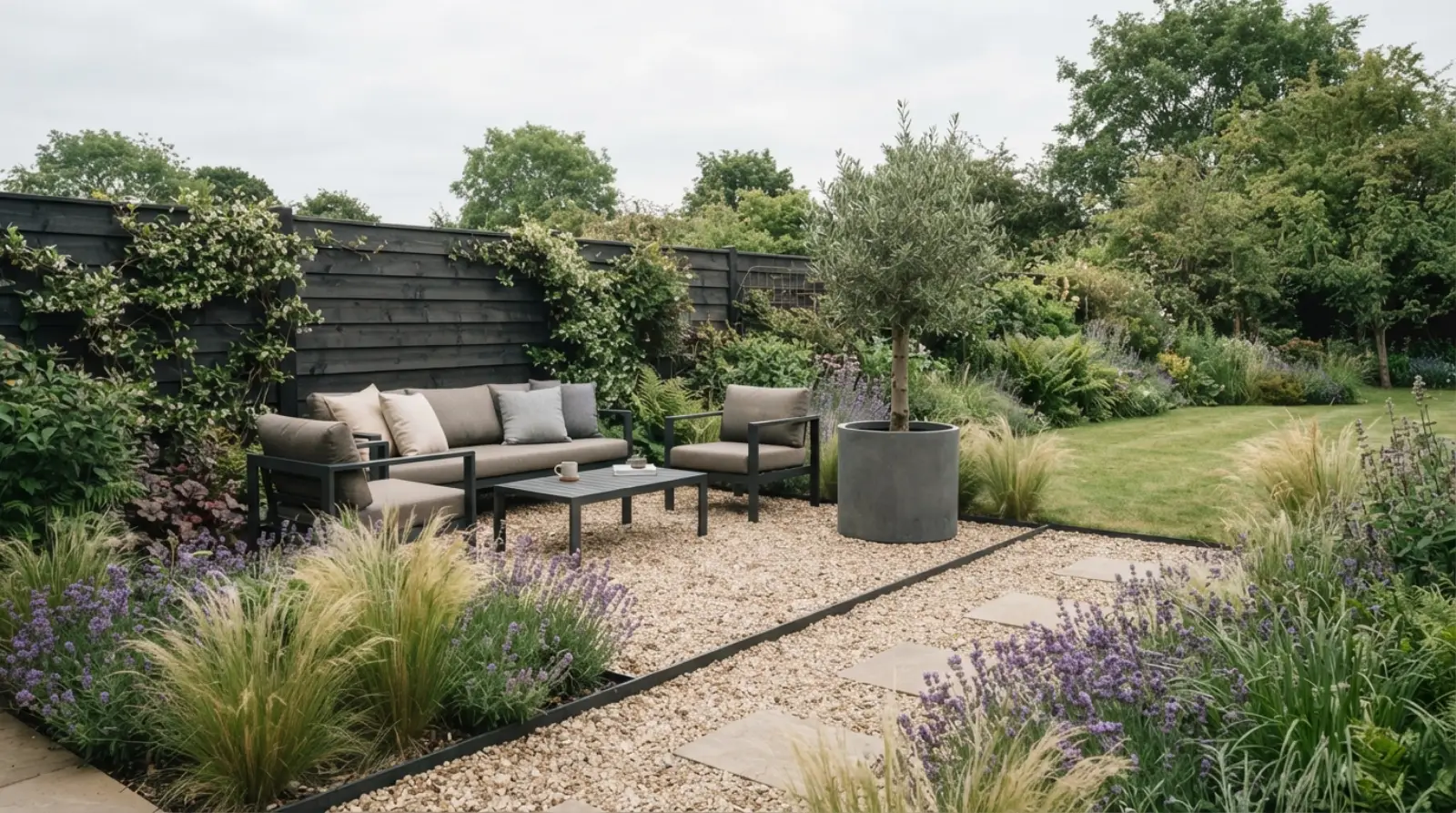
Why Simple Landscape Design Makes a Low-Maintenance Garden Look Expensive
Expensive-looking gardens are rarely busy. They feel calm, deliberate and finished. Three simple ideas create that impression:
- Clean geometry. Straight or gently curved edges and clearly defined beds look planned, while wobbly outlines look accidental.
- Repetition. A small plant palette repeated in drifts looks designed; one-of-everything looks like a collection.
- Permanent “bones”. Paths, edging, gravel or paving give the garden structure that holds up even in January.
This approach also saves effort. Fewer plant varieties mean simpler care, crisp edges need less trimming, and hard surfaces never need mowing.
How Well-Chosen Budget Garden Furniture Elevates the Whole Space
Furniture is often the largest single purchase in a simple garden, so it pays to choose with a designer’s eye rather than a bargain hunter’s. Comparing styles and prices at retailers such as Fastdaddyshop is a sensible place to start.
Choosing pieces that look more expensive than they are
- Pick clean modern or classic shapes in muted tones – charcoal, soft grey or a natural timber effect – rather than ornate or brightly coloured sets.
- Choose materials that age well. Powder-coated aluminium resists rust, good-quality resin or woven poly rattan wipes clean, and FSC-certified hardwood or pressure-treated softwood weathers attractively with occasional oiling or treating.
- Get the proportions right. One well-scaled seating area looks far more expensive than several mismatched chairs scattered around.
Placement that creates a designer effect
- Anchor the seating zone against a backdrop such as a fence, hedge, wall or border, rather than floating it in the middle of the lawn.
- Align furniture with existing lines, such as path edges or the house wall, for instant visual order.
- Leave breathing space. As a rule of thumb, allow about 90 cm behind dining chairs so they can be pulled out comfortably, and avoid cramming in extra pieces.
Styling details that cost little
- Add outdoor cushions in coordinated neutral or tonal colours.
- Finish with one simple side table or a matching pair of planters.
- Resist overcrowding; negative space reads as luxury.
Affordable Hard-Landscape Moves That Instantly Raise the Tone
Hard landscaping gives the garden its backbone, and several of the most effective options are surprisingly affordable.
- Gravel garden design. Lay gravel or pea shingle over a quality weed-suppressing membrane, contain it with neat timber, metal or brick edging, and aim for a depth of around 5 cm. Choose muted natural tones over glaring white chippings.
- Simple paths. Stepping stones or paving in one consistent material guide the eye and protect the lawn.
- Defined borders. Clean lawn edging or timber sleepers keep soil, grass and gravel apart. Re-cutting the lawn edge with a half-moon edging tool once or twice a season keeps it sharp.
- Mulch and edging tips. Spread 5–7 cm of bark or decorative stone around planting to suppress weeds and retain moisture, keeping it clear of stems and trunks.
Together these cut mowing, weeding and watering while giving the garden structure all year. One note for front gardens in England: laying more than five square metres of non-porous paving usually needs planning permission, whereas gravel and permeable paving generally do not, so check with your local council first.
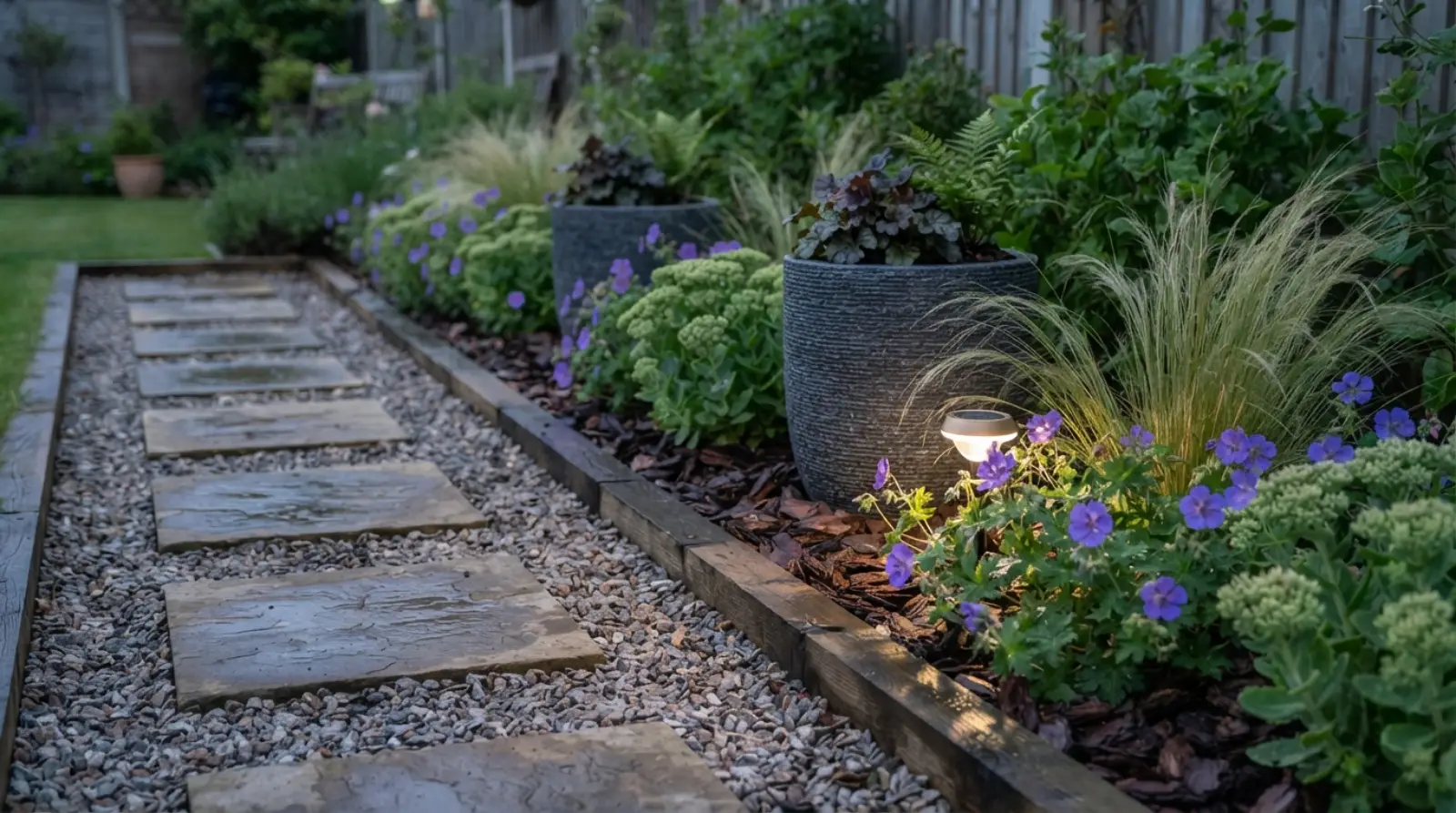
Plant Choices and Layout Tricks That Look Premium Yet Need Little Care
Planting is where many budget gardens go wrong, usually by buying one of everything. Aim for fewer, tougher plants used generously. Reliable hardy plants for low maintenance include:
- Lavender, for scent and structure in sun and free-draining soil
- Ornamental grasses, such as Calamagrostis × acutiflora ‘Karl Foerster’, for movement and winter shape
- Hardy geraniums, including long-flowering ‘Rozanne’, which also cover bare soil
- Sedums (now classified as Hylotelephium) for late-summer colour and pollinators
- Evergreen shrubs such as Viburnum tinus or Sarcococca for winter structure
Box balls are tempting for tidy structure, but box blight and box tree moth make them a riskier choice in many UK gardens.
- Plant in groups of three, five or seven rather than single specimens.
- Use ground-cover plants beneath shrubs to close gaps where weeds would otherwise appear.
- Favour long-lived perennials over annual bedding, which needs replanting every year.
New plants still need regular watering during their first season; after that they become far more self-sufficient.
More Budget-Friendly Touches That Deliver a High-End Feel
Small touches often make the biggest difference.
- Simple lighting. Solar path lights or a couple of warm-white uplighters add evening atmosphere. Mains-powered fittings should be installed by a qualified electrician.
- One focal point. A large pot, simple water bowl or statement plant beats a dozen small ornaments.
- Darker fences. A dark or soft neutral water-based fence paint or stain makes greenery stand out; just check whose fence it is first.
- A consistent colour scheme. Keep furniture, pots and soft furnishings within two or three colours.
- Minimal but regular upkeep. A short weekly session of edging, sweeping gravel and deadheading keeps everything looking cared-for.
- Seasonal tweaks. Moving pots, or adding a throw or a lantern, costs almost nothing.
Putting It All Together: What to Expect
The biggest gains come from combining structure, restrained planting and purposeful furniture placement; no single trick does it alone. Low maintenance does not mean zero maintenance, but the ongoing effort is far lower and the visual reward is high. If you would like the layout and hard landscaping refined for lasting results, our team can help.
Conclusion
A garden that looks expensive but stays easy to look after comes down to simple design principles, thoughtfully chosen affordable furniture and a handful of low-cost details. Start with one zone – the seating area and the structure around it – then expand as budget and confidence allow. When you are ready to go further, we are happy to help with hard and soft landscaping.
Frequently Asked Questions
Can a low-maintenance garden really look expensive?
Yes. Clean lines, repeated planting and good-quality edging matter more than expensive materials, and they also reduce upkeep.
What is the cheapest way to make a garden look more designed?
Define the edges. Crisp lawn edges and tidy, mulched borders cost very little and instantly look intentional.
Which garden furniture materials look high-end but stay affordable?
Powder-coated aluminium, quality woven poly rattan and treated or FSC-certified timber in muted colours usually offer the best value.
How important are edging and gravel for a premium appearance?
Very. Edging keeps gravel contained and lines crisp, while a membrane beneath helps limit weeds, so the area stays neat.