What Landscapers Wish Homeowners Knew Before Starting a Project
Last reviewed: November 2026
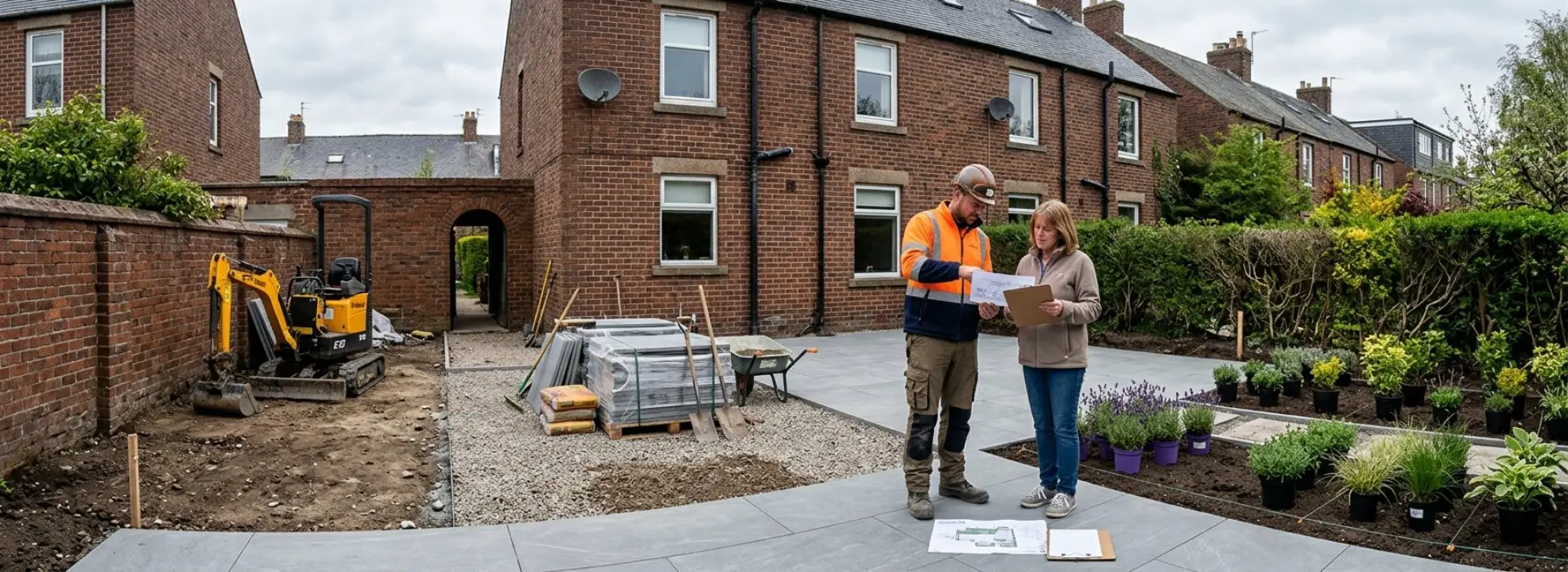
Most garden projects that go wrong do not fail because of bad workmanship. They go wrong because of decisions made, or not made, before anyone picks up a spade. A vague brief, an unrealistic budget, an unchecked access route or a start date that ignores the British weather can turn an exciting project into a stressful one.
We see the same patterns again and again. These landscaping tips for homeowners come from the conversations we wish we could have had at the start of every job.
The Most Common Mistakes Homeowners Make at the Start
When we talk about common landscaping mistakes in the UK, they rarely involve plants. They usually involve planning:
- Choosing materials before the layout. A beautiful paving sample means little if the patio is the wrong size or in the wrong place.
- Designing around a Pinterest image, not your own plot. Light, slope, soil and the shape of your house all change what will work.
- Ignoring the ground. Much of the country sits on heavy clay, which holds water and moves with the seasons. Drainage and sub-base preparation matter far more than the surface on top.
- Trying to do everything at once, then cutting corners to stay within budget.
- Leaving furniture, lighting and storage to the end, when the layout can no longer accommodate them.
Budget: What Really Drives the Cost
Homeowners often assume the price depends mainly on the size of the garden. In practice, size is only part of it. What we see affecting quotes most are:
- Groundworks: excavation, levelling, drainage, retaining walls and the removal of spoil (the soil and rubble that has to leave the site).
- Access: if materials and waste have to be carried by hand through a house or a narrow side passage, labour time rises quickly.
- Material choice: porcelain, natural stone, composite decking and hardwood all differ in both price and installation requirements.
- Site conditions: sloping ground, poor drainage, old foundations or existing structures that need to be taken out.
- Specification: a properly built base is invisible once finished but is what stops a patio from sinking.
Our honest advice is to set a realistic budget range, then keep a contingency of around 10–15 per cent for surprises. Hidden pipes, buried rubble and unexpected soil conditions are common once the ground is opened up. If a quote is far lower than the others, ask what has been left out.
A Clear Brief Saves Money and Arguments
The best projects we work on begin with a clear conversation. Before you ask for quotes, it helps to write down:
- How you want to use the garden (dining, entertaining, children, pets, growing food, relaxing)
- Who will use it, and how often
- How much upkeep you are happy to take on
- What you like and dislike, with photos for both
- Your budget range and any firm deadlines
Once work starts, agree how you will communicate: a named point of contact, a weekly catch-up and a clear process for changes. Changes are normal, but each one affects cost and timing, so they should be agreed in writing before the work is done.
Timing and Seasonality in the UK
British weather shapes almost every garden project. Spring and summer are popular, so good contractors often book up well ahead. That does not mean winter is off limits, but it does change what is sensible:
- Groundworks, paving and decking are easiest in drier months. Waterlogged clay is difficult to dig and compact, and frost can damage freshly laid mortar and concrete.
- Turf and seed generally establish best in early autumn or spring, when the soil is warm enough and moist.
- Bare-root trees and hedging are typically planted between November and March while dormant, which is also when they cost less.
Planning your project in late winter for a spring start, or in early summer for autumn, often gives better availability and less pressure on the schedule.
Access, Services, Permissions and Hidden Details
This is where we most often see surprises. Before you commit, check the following:
- Access: can a mini digger, a delivery of paving or a skip reach the garden? If a skip has to stand on the road, your council will usually require a permit.
- Underground services: gas, water, electricity and communications cables can run through gardens. Free plans are available through LinesearchbeforeUdig (LSBUD) before any digging begins.
- Planning permission: in England, decking more than 30 cm above ground generally needs it, as do walls and fences above 2 metres (1 metre beside a highway). Paving more than 5 square metres of front garden with an impermeable surface also needs permission unless water drains to a lawn or border, or the surface is permeable. Rules differ in Scotland, Wales and Northern Ireland, and properties in conservation areas or with Article 4 directions face extra limits.
- Trees: trees covered by a Tree Preservation Order, or in a conservation area, cannot simply be cut down or heavily pruned without approval.
- Boundaries: work close to a shared wall or fence may fall under the Party Wall etc. Act 1996, and it is always worth talking to your neighbours first.
- Damp-proof course: patios should sit at least 150 mm below it, with a slight fall away from the house so water drains away.
Design and Function: What People Forget
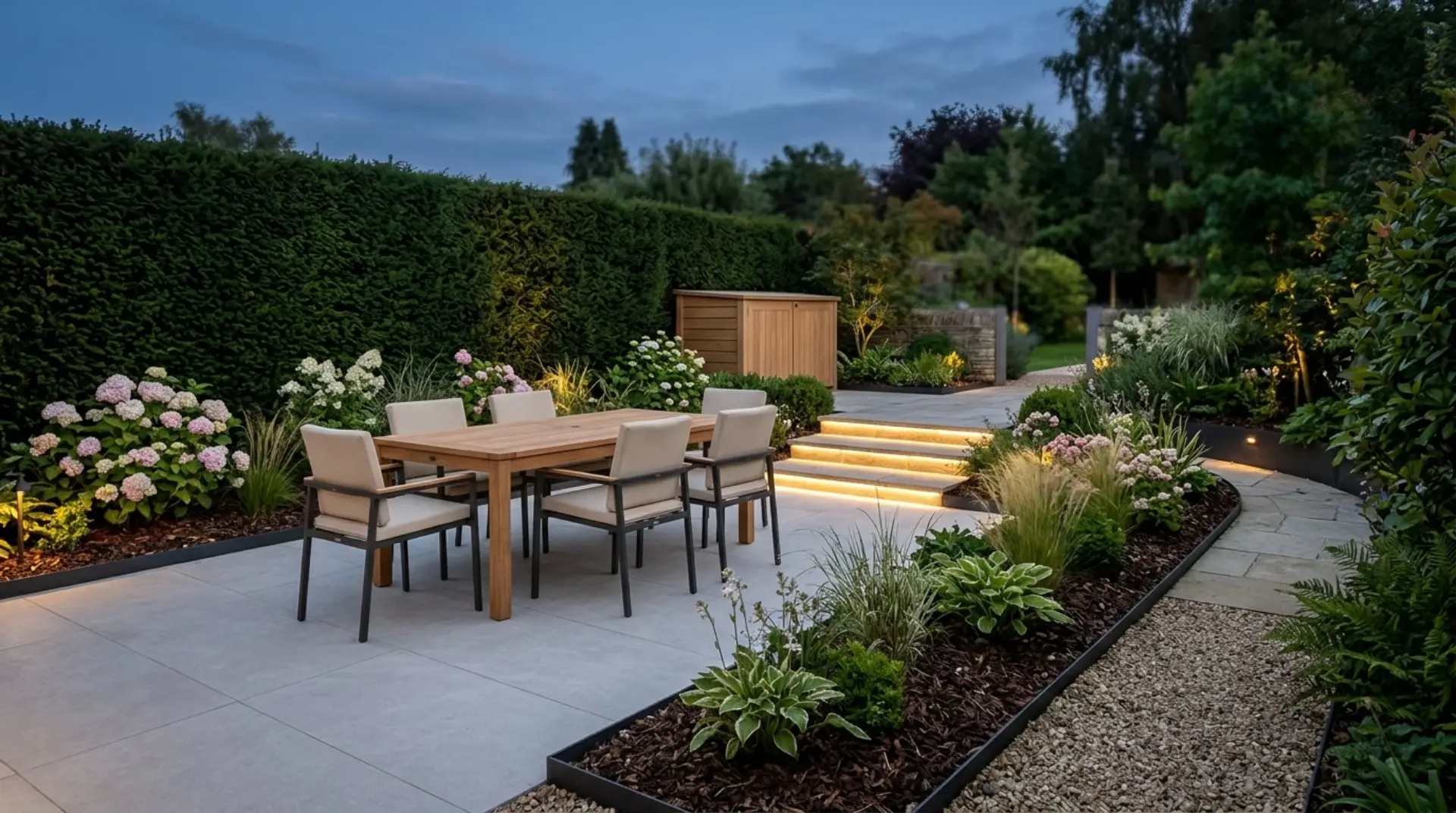
A garden can look lovely on a plan and still be frustrating to use. We spend a lot of time encouraging clients to think about how the space will actually work:
- Seating and dining zones: size the patio around the furniture you want, remembering that chairs need room to be pulled out. As a rule of thumb, allow about a metre around a dining table.
- Furniture quality: choosing well-made, weather-resistant outdoor furniture at the planning stage affects the whole design. It determines the size of the terrace, how much shade you need and how the garden feels from the house. Cheap furniture can make even a beautifully built patio look unfinished.
- Lighting: low-voltage LED lighting is simpler to install and lets you enjoy the garden after dark. Mains-powered electrics outdoors should always be fitted by a qualified electrician.
- Storage: bins, bikes, cushions, tools and the lawnmower all need a home, or they end up on show.
- Sun and shelter: notice where the sun falls at different times of day before deciding where to sit.
Considering these things early costs nothing. Adding them afterwards often means altering finished surfaces.
How to Choose a Landscaper
Hiring a landscaper in the UK is largely about trust, so take your time. Here is what we would look for if we were in your position:
- Recent examples of similar work, and the option to speak to past clients
- Public liability insurance, and proof of it
- Membership of a recognised trade body, such as the Association of Professional Landscapers (APL) or the British Association of Landscape Industries (BALI), which you can check directly with the organisation
- An itemised written quote covering materials, labour, waste removal, timescales and what is not included
- A sensible payment schedule linked to stages of work, rather than a large payment upfront
- Clear answers about who will be on site and who is responsible for the work
Compare at least three quotes like for like, and be cautious of anyone who is vague, pressures you to decide quickly or offers a price that seems too good to be true.
Checklist Before You Start
- Write a clear brief covering how you will use the garden
- Set a budget range with a 10–15 per cent contingency
- Check access for machinery, materials and waste
- Confirm underground services before any digging
- Check planning, conservation, tree and boundary rules
- Plan seating, furniture, lighting and storage in the design
- Choose the right season for the work
- Get at least three itemised written quotes
- Verify insurance, references and trade membership
- Agree stages, payments and how changes will be handled
Conclusion
The most successful landscaping projects are rarely the most expensive. They are the best planned. Understanding what to know before a landscaping project begins, from budget and timing to access, permissions and how you will really use the space, gives you far more control over the result. Take the time to plan properly, ask plenty of questions and choose a contractor who is happy to answer them. Your garden will be better for it.