How to Create a Low-Maintenance Garden That Still Looks Expensive
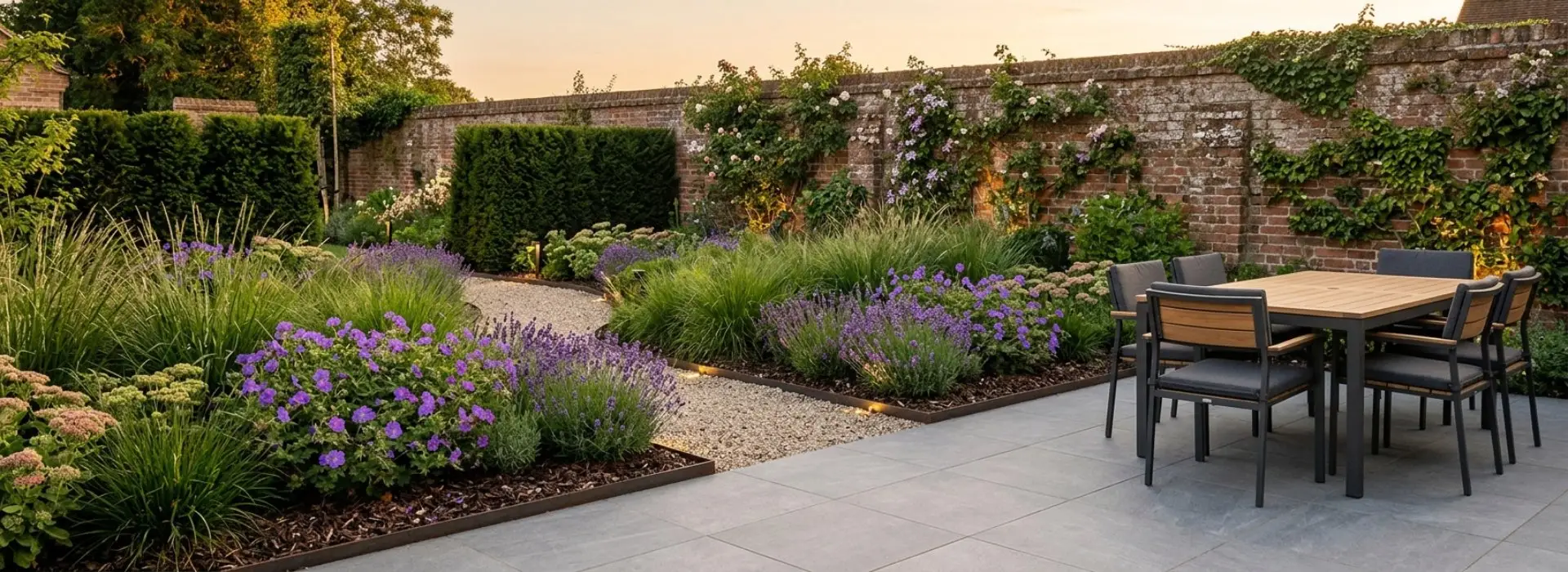
Most homeowners want the same thing from their outdoor space: a garden that looks polished all year round without taking over every weekend. The good news is that an expensive looking garden has very little to do with budget or hours of weeding. It comes down to structure, restraint and a handful of well-chosen materials.
This guide covers practical low maintenance garden ideas that suit the British climate, from plants that cope with wet winters and dry summers to the hard landscaping and furniture that make a space feel considered rather than thrown together.
The Principles of Easy Care Garden Design
A good easy care garden design starts with a few simple rules, and they matter more than any individual plant.
- Keep the layout simple. Clean lines, generous shapes and a clear purpose for each area look more expensive than lots of small features competing for attention.
- Limit the palette. Two or three paving or surfacing materials and a restrained colour scheme create the calm, cohesive look associated with high-end gardens.
- Work with your conditions. Check your soil (clay, sand or loam), how much sun each area gets and how exposed it is. Plants that suit the spot need far less watering, feeding and replacing.
- Reduce what needs regular attention. Lawns, annual bedding, hanging baskets and large collections of pots demand the most time. Cutting back on them is the quickest route to a low maintenance garden in the UK.
Choosing Plants That Look Good and Ask for Little
Planting in drifts of the same variety looks far more deliberate than single specimens scattered about. Choose tough, long-flowering or structural plants that suit UK conditions:
- Perennials: Geranium ‘Rozanne’ flowers for months, Nepeta ‘Walker’s Low’ suits sunny borders, and Hylotelephium (sedum) ‘Herbstfreude’ copes well with dry spells and feeds pollinators in late summer.
- Ornamental grasses: Miscanthus sinensis and Stipa tenuissima add movement and winter structure. Cut them back once a year in late winter.
- Evergreen structure: Sarcococca confusa, Viburnum tinus, Pittosporum tenuifolium and yew (Taxus baccata) keep borders looking full in winter. Clipped yew or Ilex crenata are sensible alternatives to box, which many UK gardeners now avoid because of box blight and box tree moth.
- Shrubs: Hydrangea paniculata ‘Limelight’ and Hebe varieties give long seasons of interest with minimal pruning.
- Scent and softness: Lavender (Lavandula angustifolia ‘Hidcote’) suits sunny, free-draining spots and needs only a light trim after flowering.
Keep your plant list short. Repeating five or six varieties throughout the garden looks cleaner and is easier to look after than thirty different ones.
Hard Landscaping: The Foundation of an Expensive Look
If you want to know how to make a garden look expensive, start with the ground. Quality surfaces are what separate a designed garden from a collection of plants.
- Patios: Porcelain paving is popular because it is hard-wearing, resists staining and needs little more than an occasional brush and rinse. Natural sandstone and limestone offer a more traditional look but may need sealing.
- Decking: Composite boards avoid the annual treatment that softwood needs, while hardwood is long-lasting but pricier. Whichever you choose, allow for good ventilation underneath, as British damp is hard on timber.
- Paths: Large-format slabs or stepping stones set in gravel feel more luxurious than narrow paths of small, uneven pavers.
- Gravel: A compacted layer over a permeable membrane gives a tidy finish, helps drainage and suppresses weeds. A 10 mm or 20 mm angular gravel stays in place better than rounded pebbles.
- Edging: Steel or brick edging gives crisp definition between lawn, border and path, and it is one of the cheapest ways to look expensive.
A solid sub-base matters more than most people expect. Patios laid on a properly compacted base stay level for years, whereas poorly prepared ones sink and crack.
If you are paving a front garden, note that in England, laying more than 5 square metres of impermeable surface generally needs planning permission unless the water drains to a lawn or border, or the surface is permeable. Check with your local authority before starting.
Mulching, Ground Cover and Automation
Mulch is the single biggest time-saver in a UK border. A layer roughly 5–7 cm deep of bark chips or well-rotted compost suppresses weeds and keeps moisture in the soil. Apply it in spring or autumn when the ground is damp, and keep it clear of plant stems.
Ground-cover plants such as Geranium macrorrhizum, Epimedium and Alchemilla mollis fill gaps and cut down on weeding in shady or partly shaded areas.
For watering, a simple drip irrigation system with a timer delivers water to roots rather than leaves and wastes far less than a hosepipe. Water butts help too, particularly as temporary hosepipe bans have become more common in dry summers. If you keep a lawn, a robotic mower can maintain it with almost no effort.
Low-voltage LED lighting in a warm white tone completes the effect. Lighting a few key plants, a wall or steps makes a garden look composed after dark.
Seating Areas and Outdoor Furniture
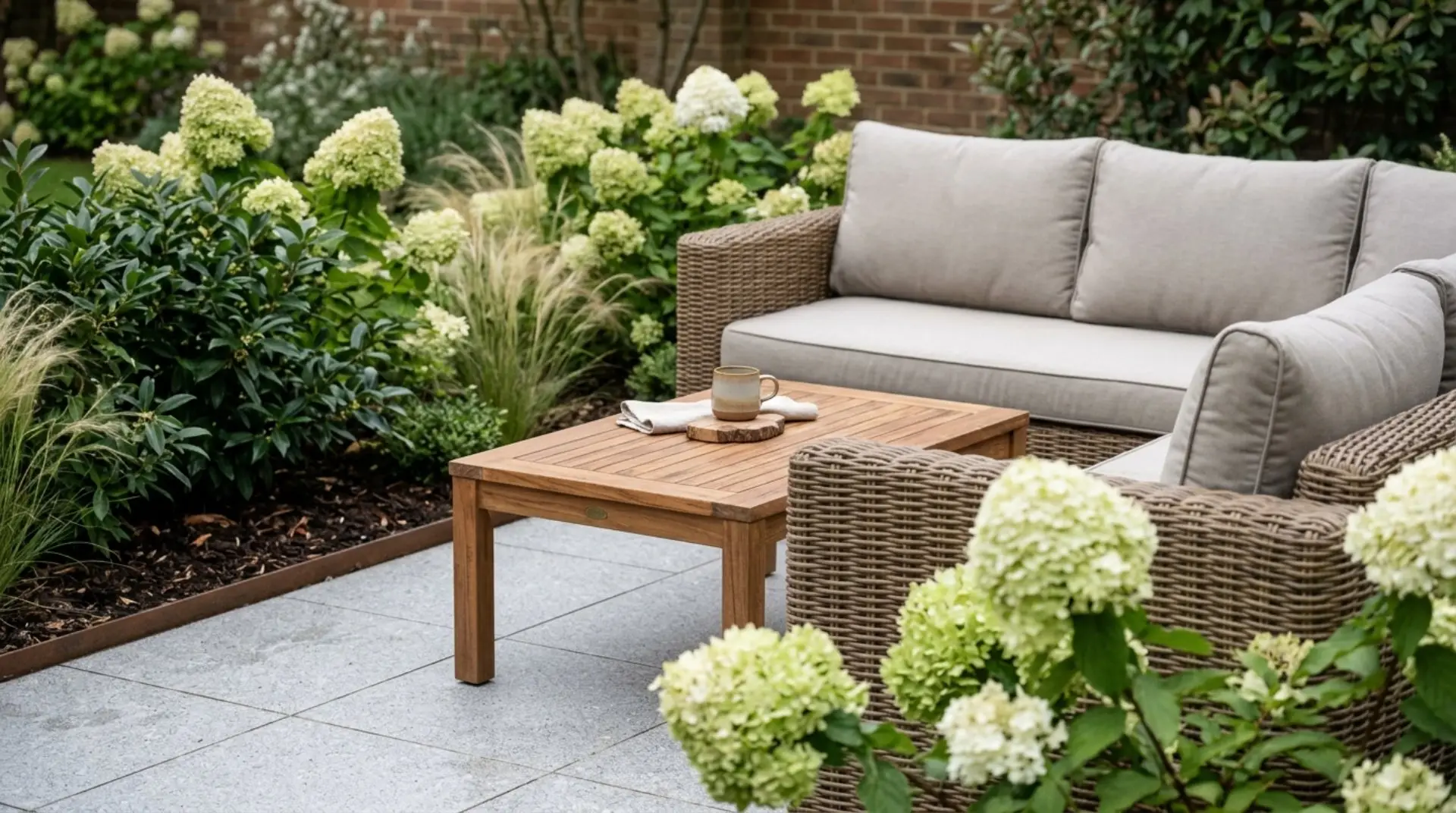
Even a perfectly planted garden can look unfinished without somewhere to sit. A defined seating area tells visitors the space is meant to be used, and furniture quality has a surprisingly large effect on how expensive the whole garden feels.
Choose weather-resistant materials that cope with British rain and frost:
- Teak (look for FSC certification) weathers naturally to a soft silver-grey if left untreated.
- Powder-coated aluminium is light, rust-resistant and easy to wipe clean.
- High-quality synthetic rattan offers a woven look without the upkeep of natural cane.
Good outdoor furniture pays off in three ways: it stays looking sharp with minimal care, it anchors the terrace or patio as a focal point, and it encourages you to actually enjoy the garden. Keep the style consistent, choose neutral tones such as charcoal, stone or natural timber, and add a few outdoor cushions and a quality parasol or pergola for shade. Fitted covers or a storage box protect cushions through the winter months.
Common Mistakes That Make a Garden Look Cheap
- Too many materials and colours, which makes the space feel chaotic.
- Thin, uneven paving or poorly laid surfaces that crack and shift.
- Plastic edging and flimsy borders that bend and fade.
- Overcrowded planting with one of everything and no repeated structure.
- Cheap, lightweight furniture that fades, warps or blows around in the wind.
- No winter interest, leaving the garden bare for half the year.
- Neglecting the details, such as dead pots, faded cushions or a messy lawn edge.
Quick Checklist
- Simple layout with a limited material palette
- Plants chosen for your soil, sun and exposure
- Repeated planting in groups, not single specimens
- Evergreen structure for winter
- Quality paving, decking or gravel on a solid base
- Crisp edging throughout
- 5–7 cm mulch on all borders
- Drip irrigation or water butts
- Warm LED lighting
- Durable, well-designed outdoor furniture
Conclusion
A low maintenance garden in the UK does not have to feel plain or temporary. By keeping the design simple, investing in good hard landscaping, choosing tough, repeat-planted species and finishing with quality outdoor furniture, you can create an expensive looking garden that stays tidy with only a few hours of care each month. Start with the foundations, add the details gradually, and let the garden do most of the work for you.